
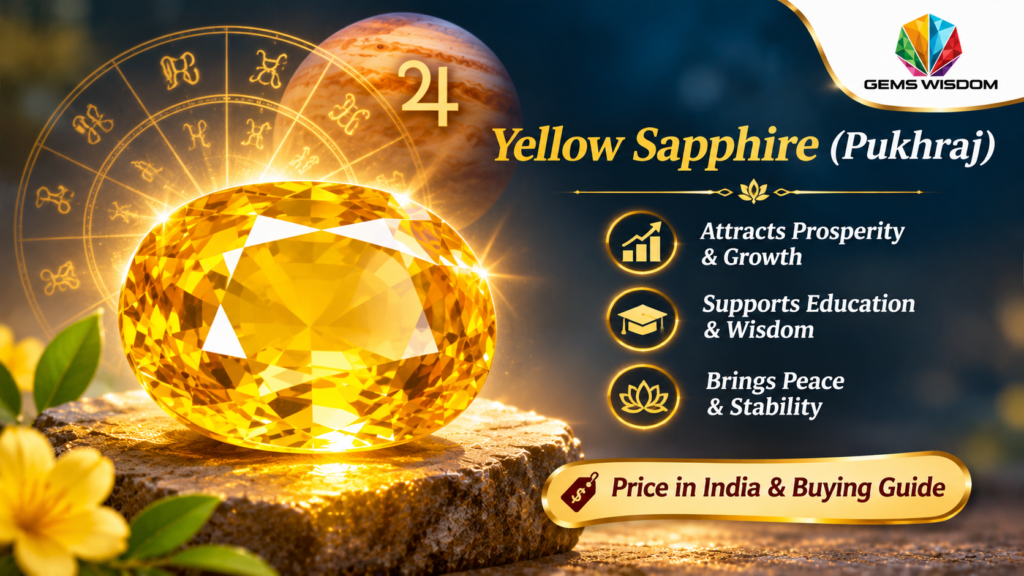
Buying a Pukhraj is a big decision, both financially and spiritually. If you have searched for the Yellow Sapphire Gemstone Price in India, you have probably noticed how wide the range is. One seller quotes a few thousand rupees, another quotes several lakhs for what looks like the same stone. This guide explains why prices differ, what you are really paying for, and how to avoid overpaying for a stone that is not what it claims to be.
What Is Yellow Sapphire (Pukhraj)?
Yellow sapphire is a variety of corundum, the same mineral family as ruby and blue sapphire. Its colour ranges from pale lemon to rich golden yellow. In Vedic astrology, it is the gemstone of Jupiter (Guru), the planet linked with wisdom, learning, and growth. Because of this, many people buy it on an astrologer’s advice, and they want a genuine natural stone, not a lookalike.
Yellow Sapphire Gemstone Price in India: What Decides the Cost?
There is no single fixed rate. The final price depends on several factors working together.
1. Origin. Sri Lankan (Ceylon) stones are known for a bright, clean yellow and usually cost more. Thai stones are widely available, deeper in tone, and generally more affordable. Stones from Africa and other regions fall in between depending on quality.
2. Heated or unheated. Heating is a common, accepted treatment that improves colour, as long as it is disclosed. Unheated natural stones are much rarer, so they carry a noticeable premium.
3. Colour. A vivid, even, medium-to-rich yellow is valued above pale or patchy colour.
4. Clarity. Fewer visible inclusions mean a higher price. Small natural inclusions are normal, but cracks or cloudiness reduce value.
5. Cut and shape. A well-cut stone reflects light evenly and wastes less rough material, which is reflected in the price.
6. Carat weight. Price per carat usually rises as the stone gets larger, because big, clean, well-coloured stones are rare.
7. Certification. A report from a recognised gemological laboratory confirms that the stone is natural and states its origin and treatment. Certified stones cost more than uncertified ones, but the certificate is what protects you.
Yellow Sapphire Stone Price in India: Budget, Mid-Range and Premium
As a general guide, the market falls into three broad tiers:
- Budget: Heat-treated stones, often from Thailand or Africa, with moderate clarity. Suitable if you want a genuine natural stone at a lower cost.
- Mid-range: Good colour and clarity, often heated Ceylon or high-grade Thai stones, with a lab certificate.
- Premium: Unheated, certified Ceylon stones with vivid colour and excellent clarity. These can cost many times more than budget stones of the same weight.
Rates change with the market, so always ask for a current written quotation that mentions origin, carat weight, and treatment. If you are comparing the Yellow Sapphire Stone Price in India across sellers, make sure each quote describes the same type of stone. Otherwise, the comparison tells you nothing.
Yellow Sapphire Stone Cost in India: Why Cheap Is Often Risky
When people look at the Yellow Sapphire Stone Cost in India, the temptation is to pick the lowest figure. That is where most buyers get caught. Very cheap “Pukhraj” stones are often one of the following:
- Glass or glass-filled stones
- Synthetic (lab-created) sapphire sold as natural
- Citrine or yellow topaz sold as sapphire
- Heavily treated or dyed stones with no disclosure
A large, flawless, deep yellow stone at a very low price should make you cautious. Real stones with those qualities are not sold at bargain rates.
How to Check a Real Yellow Sapphire Before You Buy
- Ask for a lab certificate that clearly states natural origin and any treatment.
- Look at the stone in natural light. The colour should look even and lively, not dull or oily.
- Check for natural inclusions. A few small internal features usually point to a natural stone.
- Request clear photos or videos of the actual stone, not stock images.
- Read the return and authenticity policy before paying, and keep your invoice.
Who Should Wear Yellow Sapphire?
According to Vedic tradition, Pukhraj is suggested when Jupiter is weak or needs strengthening in a birth chart. It is not meant to be worn on impulse or because someone else wears it. A qualified astrologer should confirm that it suits you and recommend the right weight. Gemstone benefits are matters of belief and tradition, not scientific proof, so treat a stone as a supportive remedy and not a guaranteed outcome.
Where to Learn More Before You Buy
You can see natural yellow sapphire details, certification information, and available options on our Yellow Sapphire (Pukhraj) page. Reviewing a certified stone’s weight, origin, and treatment details is the best way to understand what a fair price looks like.
Final Thoughts About Yellow Sapphire Gemstone Price in India
The Yellow Sapphire Gemstone Price in India is not one number. It is the result of origin, treatment, colour, clarity, cut, weight, and certification. The smartest approach is to decide your budget, insist on a recognised lab report, compare like-for-like quotes, and consult an astrologer before you commit. A fair price for a genuine, certified stone is always better value than a cheap price for something doubtful. At Gems Wisdom, we believe an informed buyer is a confident buyer, and we encourage you to verify every detail before you purchase.
Prices vary by market and over time. Gemstone benefits are based on faith and tradition.
Yellow sapphire price in India varies by origin, treatment, colour, and carat weight, from affordable heated stones to premium unheated Ceylon gems costing far more.
Ceylon stones are usually brighter and often unheated, so cost more. Thai stones are typically heated and cheaper. Choose based on your budget and certification.
Ask for a certificate from a recognised gemological lab stating natural origin and treatment. Check colour, inclusions, and return policy, and avoid unusually cheap, flawless stones.
Heating enhances colour and is accepted when disclosed. Unheated stones are rarer, so cost more. Always confirm the treatment status on the lab report.
In Vedic astrology, yellow sapphire represents Jupiter. It is suggested when Jupiter needs strengthening, only after a qualified astrologer reviews your birth chart.
Astrologers commonly suggest 3 to 6 carats, often based on body weight and the birth chart. Follow your astrologer’s advice instead of choosing a size.
Larger, clean, well-coloured sapphires are rarer, so price per carat rises with size. A two-carat stone usually costs more per carat than a one-carat one.