
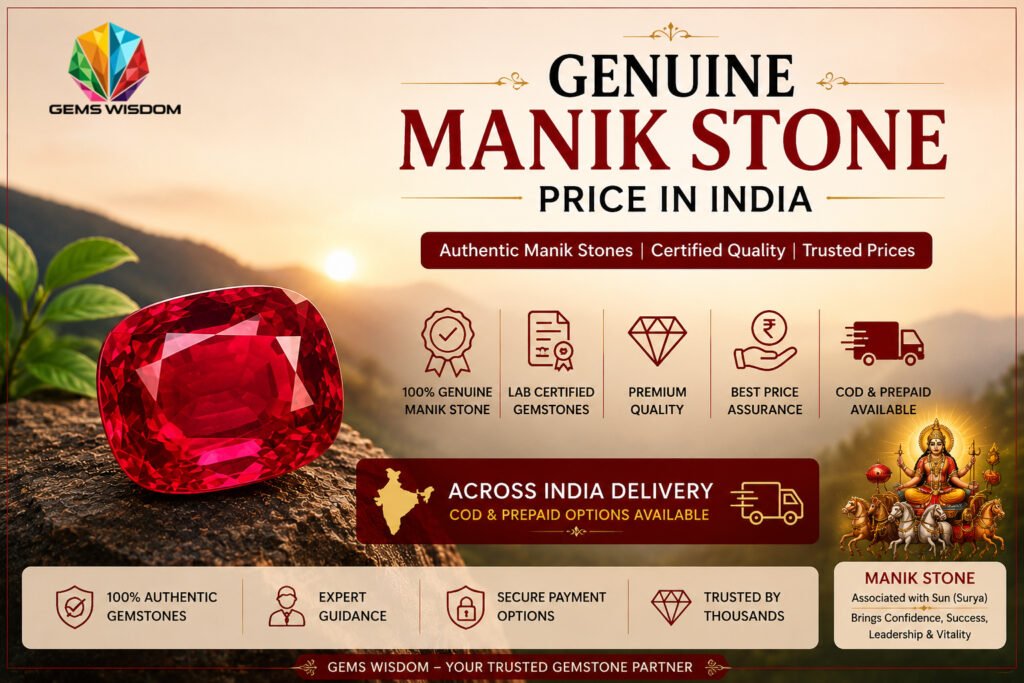
Manik Stone Price in India sits anywhere between ₹5,000 and ₹3,00,000+ per carat, and the gap comes down almost entirely to two things: where the stone was mined, and whether it’s been heated to improve its colour. A Mozambique ruby that’s been standard heat-treated might sit at the low end; an unheated Burmese stone with true “pigeon blood” red can sell for many times more per carat.
Browse our full range of certified Ruby (Manik) stones in the Ruby Stone collection, or continue below for the astrological buying guide specific to Manik.
The Sun’s Gemstone
Manik — Ruby in English — is the gemstone of the Sun (Surya) in Vedic astrology, and that single association shapes almost everything about why people buy it. Where Neelam is worn for discipline and Panna for intellect, Manik is worn for authority, visibility, and leadership — it’s traditionally the stone recommended for people stepping into positions of responsibility, public roles, or government service, since the Sun governs status and recognition.
Manik Stone Price by Grade
| Grade | Typical Source | Price Range (per carat) |
|---|---|---|
| Commercial, heat-treated | Mozambique, Thailand | ₹5,000 – ₹40,000 |
| Fine, lightly heated | Mozambique (top grade) | ₹40,000 – ₹1,20,000 |
| Natural, unheated | Burma (Mogok) | ₹1,20,000 – ₹3,00,000+ |
Genuinely unheated Burmese ruby is one of the rarest gemstones in the market — treat any unheated Burmese offer well below this range with real suspicion.
Are You a Match for Manik?
Astrologers generally point to Leo (Simha) and Aries (Mesh) ascendants or Moon signs as the strongest natural fits, since the Sun rules Leo directly and shares a friendly relationship with Mars-ruled Aries. Manik is also commonly recommended during a Sun Mahadasha or Antardasha, particularly for people whose Sun is well-placed but needs strengthening — think career visibility, government examinations, or leadership transitions. As with any gemstone tied to a specific planet, a poorly-placed or afflicted Sun in your chart can mean Manik isn’t the right fit, which is exactly why this is a “consult first” gemstone rather than a “buy first” one.
Timing and Method of Wearing
Sunday is the day, ideally in the early morning close to sunrise, when the Sun’s energy is considered strongest. The ring finger of the right hand is most commonly advised, set in gold or copper. Many astrologers suggest a short trial period — worn as a pendant rather than a ring initially — so you can gauge how it feels before committing to permanent wear.
Gemstone Pairings
Manik is traditionally paired well with Moti (Pearl) and Mooga (Coral), since Moon and Mars are both considered supportive of the Sun. It’s generally kept separate from Neelam and Panna, as Saturn and Mercury are viewed as less compatible with Sun energy in most traditional pairing charts. Confirm any combination with your astrologer rather than a jeweller, since the two sometimes give different advice for different reasons.
Colour, Clarity, and the Heat-Treatment Question
Ruby pricing hinges on a shade that gemologists call “pigeon blood” red — a vivid, slightly purplish-red that’s considered the benchmark for the finest stones, historically associated with the best Burmese material. Below that ideal, colour ranges through pinkish-red and brownish-red, both priced progressively lower.
Almost all commercial ruby on the market today has been heat-treated to improve colour and dissolve silk inclusions that would otherwise cloud the stone — this is one of the biggest single factors in the Cost Of Manik Stone in India, and it’s standard, disclosed practice that doesn’t make a stone less “real.” What buyers should ask about specifically is the degree: standard heat treatment is common and affordable; ruby with glass or lead-glass filling (used to mask larger fractures) is a distinctly lower category that should be priced and disclosed accordingly, not sold at natural-stone prices.
What a Proper Certificate Should State
Origin (where determinable), treatment type and extent, carat weight, and clarity characteristics. For Manik specifically, insist the certificate distinguishes between simple heat treatment and glass-filling — this distinction affects both astrological suitability (heat-treated stones are generally accepted for astrological use; glass-filled stones typically aren’t recommended) and resale value significantly.
Buying Without Getting Burned
Cross-check origin claims against price before anything else — a “Burmese unheated” claim priced like a commercial Mozambique stone is the single most common red flag in this category. Ask directly whether a stone is heat-treated or glass-filled; a seller who volunteers this without being pressed is generally more trustworthy than one who avoids the question. And don’t judge purely by how red a stone looks in a photo — colour under different lighting can be misleading, and a proper certificate matters more than a product image.
How Gems Wisdom Handles Manik
Every Manik gemstone through Gems Wisdom carries a certificate stating origin, treatment category, and clarity grade before it’s listed — including the heat-treatment versus glass-filling distinction that matters specifically for this stone. Pan-India delivery is available with prepaid and cash-on-delivery, and our team is available to help you match carat weight and grade to your astrologer’s specific recommendation.
Bottom Line
Manik Stone Price in India — or the Cost Of Manik Stone in India, however you search for it — isn’t just about carat weight and colour. It’s about the honesty of two specific disclosures: where the stone came from, and exactly how it was treated. Get both of those confirmed on a proper certificate, and the price you’re paying will actually match what you’re getting. Gems Wisdom builds every Manik listing around that same standard, so the certificate does the talking rather than the price tag alone.
Want the gemological deep-dive instead — colour grading, origin comparison, and jewellery-use notes? Our Natural Ruby Gemstone Price in India guide covers that side in full. Certified Manik stones are available in our Ruby (Manik) Stone collection.
Manik Stone Price in India ranges from ₹5,000 to ₹3,00,000+ per carat, depending on origin and treatment. Unheated Burmese stones sit at the top; treated Mozambique stones are the affordable entry point.
Origin and heat-treatment status are the two biggest factors. Natural, unheated Burmese "pigeon blood" ruby can cost several times more than a treated Mozambique stone of similar size.
Yes — standard heat treatment is a disclosed, industry-accepted practice. Glass-filled ruby is a distinctly separate, lower category and shouldn't be priced like a natural stone.
The ring finger of the right hand, set in gold or copper, is most commonly advised — ideally worn on a Sunday morning after astrological consultation.
No — Manik suits Leo and Aries ascendants best and is generally recommended during a favourable Sun period. A poorly-placed Sun can mean it isn't the right stone for your chart.
Origin, carat weight, and clarity — plus, critically, whether the stone is simply heat-treated or glass-filled, since that distinction affects both price and astrological suitability.