
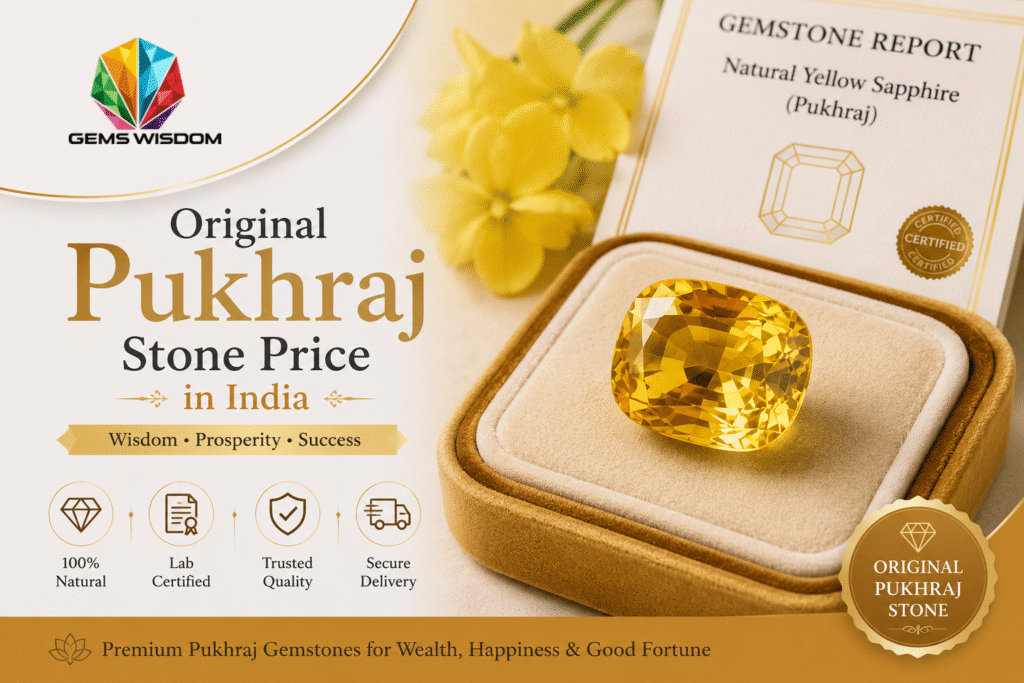
Original Pukhraj Stone Price in India generally falls between ₹4,000 and ₹2,50,000+ per carat, with Ceylon-origin, untreated stones at the top and treated Bangkok-origin stones forming the accessible middle. But before getting into that range in detail, there’s a problem specific to Pukhraj worth addressing first — one that matters more here than for almost any other gemstone on this site.
The Substitution Problem
Pukhraj is one of the most commonly misrepresented gemstones in the Indian market. Because natural citrine and certain treated topaz stones can resemble yellow sapphire at a glance, they’re frequently sold — sometimes knowingly, sometimes through seller ignorance — as “Pukhraj” at a fraction of genuine Yellow Sapphire’s value. A citrine priced like a real Pukhraj isn’t just bad value; astrologically, it’s considered to carry none of Jupiter’s intended effect, since the belief is tied specifically to corundum (true sapphire), not a different mineral entirely. This is why certification matters more for Real Pukhraj Stone Price in India than it does for almost any other stone covered on this site — the risk isn’t primarily “treated vs untreated,” it’s “genuine mineral vs a different, cheaper one entirely.”
Pukhraj Price by Origin and Grade
| Origin / Grade | Character | Price Range (per carat) |
|---|---|---|
| Bangkok, treated | Bright, affordable, widely available | ₹4,000 – ₹25,000 |
| Madagascar | Good clarity, mid-range pricing | ₹25,000 – ₹80,000 |
| Ceylon, natural untreated | The market benchmark for genuine Pukhraj | ₹80,000 – ₹2,50,000+ |
(For comparison purposes only — see our Yellow Sapphire Stone Price in India guide for a full gemological breakdown of colour grading and treatment types.)
Is Pukhraj Right for You?
Jupiter governs wisdom, wealth, marriage prospects, and higher learning in Vedic astrology, so Pukhraj is traditionally recommended for people seeking growth in these specific areas — students preparing for higher education, professionals seeking advancement, or those consulting an astrologer about marriage timing. Sagittarius (Dhanu) and Pisces (Meen) ascendants or Moon signs are considered the most naturally aligned with Jupiter’s energy. As with any planetary gemstone, an astrologer should confirm your Jupiter placement is positioned to benefit from strengthening before you buy — a poorly-placed Jupiter can mean Pukhraj isn’t the right recommendation for your specific chart.
When and How to Wear It
Thursday is Pukhraj’s day, and morning wear is generally preferred. Most astrologers recommend the index finger of the right hand, set in gold. As with the other gemstones covered on this site, a short trial period — worn initially as a pendant rather than a permanent ring — lets you observe the effect before committing further.
Pairing Do’s and Don’ts
Pukhraj is traditionally paired well with Panna (Emerald) and Moti (Pearl), since Mercury and Moon are both considered supportive of Jupiter’s energy. It’s generally kept separate from Neelam (Blue Sapphire), as Jupiter and Saturn are viewed as adversarial planets in most traditional pairing systems. Confirm any combination with your astrologer directly, since pairing advice can vary between traditions.
Certification: What to Actually Check For
Given the substitution risk above, a proper certificate for Pukhraj needs to do more than confirm “natural” and “treatment status” — it needs to confirm the stone is corundum (true sapphire) at all, distinguishing it from citrine or topaz. Ask specifically whether the lab report identifies the mineral species, not just the colour and clarity grade. This single check protects you more than any other single step in the buying process for this particular gemstone.
Cost Of Pukhraj Stone in India: What Actually Moves the Number
Beyond the substitution issue, standard factors apply: origin (Ceylon commanding the strongest premium), colour (a bright, even golden yellow valued highest over pale or greenish-yellow tones), clarity (natural inclusions are common and acceptable in moderation), and treatment (heating is widespread and disclosed; untreated stones cost meaningfully more and are generally preferred for astrological use).
Why Buyers Choose Gems Wisdom for Pukhraj
Every Pukhraj listed through Gems Wisdom is lab-certified with the mineral species confirmed — not just colour and clarity — specifically to rule out citrine or topaz substitution before a stone reaches our catalogue. Certificates also state origin and treatment status clearly, so the Pukhraj Ratna Price in India you pay matches exactly what you’re buying. Pan-India delivery is available with prepaid and cash-on-delivery, with guidance from our team to match a stone to your astrologer’s specific recommendation.
The Short Version
Original Pukhraj Stone Price in India isn’t just a range to memorise — it’s a number that only means something once you’ve confirmed the stone is genuine corundum in the first place, which is a bigger risk factor here than for most other gemstones. Get the mineral species confirmed on the certificate, then compare origin, colour, and treatment to make sure the price matches the grade. Gems Wisdom verifies mineral species on every Pukhraj listing specifically because this substitution issue is common enough to warrant it.
Want the gemological side — colour grading, origin comparison, and treatment types? See our Yellow Sapphire Stone Price in India guide. Certified Pukhraj stones are available in our Yellow Sapphire (Pukhraj) collection.
Original Pukhraj Stone Price in India ranges from ₹4,000 to ₹2,50,000+ per carat. Ceylon-origin, untreated stones sit at the top of that range; treated Bangkok-origin stones are the accessible entry point.
Citrine looks visually similar in colour and is far cheaper to mine and cut, making it a common — sometimes deliberate — substitute sold under the Pukhraj name. This is why a certificate confirming mineral species matters more for genuine Pukhraj than for most other gemstones.
No real difference in meaning — "Real" is typically added by buyers specifically because of how common citrine and topaz substitution is in this category, as a way of searching for genuine corundum-based Yellow Sapphire rather than a cheaper imitation.
Yes — heat-treated stones, while legitimate and disclosed, typically cost 30-50% less than natural untreated stones of similar visual quality. Astrologers generally recommend untreated stones for gemstone-remedy purposes specifically.
Jewellery buyers can reasonably consider treated stones for better value and durability. Astrology buyers are generally advised to prioritise natural, untreated, certified corundum specifically, even at a higher price point.
Yes — this is a reasonable step for higher-value purchases. Most cities with an active gemstone market have independent gem-testing labs where you can verify a certificate's claims before finalising a purchase.